Comfort in Deep Cold
Standard alpine ski clothing is engineered for high cardiovascular output on a chairlift hill, not for standing motionless on frozen gravel at midnight. When your heart rate drops to resting level in sub-zero air, peripheral vasoconstriction reduces blood flow to fingers and toes to protect core temperature. Proper Arctic dressing counters this by trapping generous volumes of still air around your torso and legs while isolating your boots from conductive ground frost.
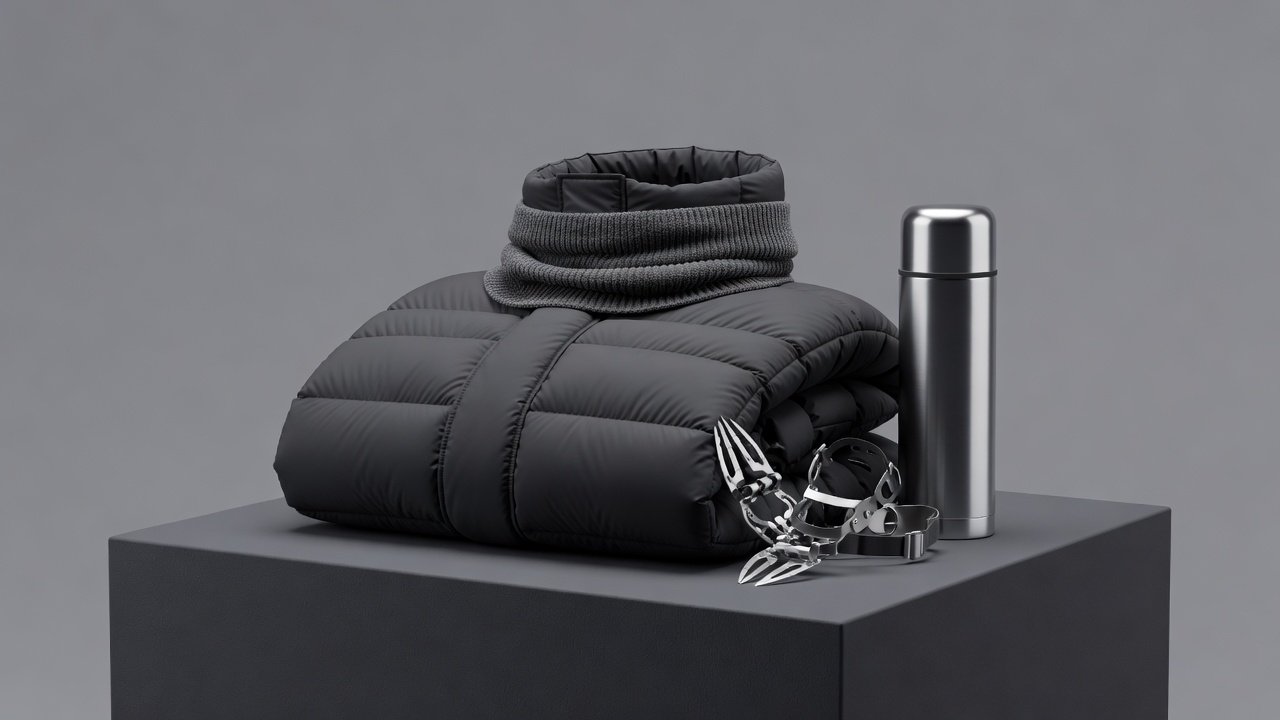
Stationary Layering by Ambient Temperature
Use this matrix as a baseline for standing outdoors for ninety minutes or longer with light wind (under 6 m/s). Always carry your heaviest static insulation layer in a daypack until you finish walking to your viewpoint so you never sweat into your base layers.
| Body Zone | Coastal Mild (+1°C to -7°C) | Sub-Arctic Cold (-8°C to -16°C) | Deep Continental (-17°C to -30°C) |
|---|---|---|---|
| Base Layer (Torso & Legs) | 200 g/m² merino crew & leggings | 250 g/m² merino zip-neck & full tights | Mesh vapour-wicking liner + 260 g/m² merino |
| Mid Insulation | Midweight fleece sweater | High-pile fleece + lightweight down vest | Heavy expedition fleece + insulated down trousers |
| Outer Shell & Parka | Windproof waterproof shell over midweight down | Box-wall baffled down parka (250g+ fill weight) | Expedition parka extending below mid-thigh + wind ruff |
| Hands | Merino liner + windproof softshell glove | Merino liner + insulated leather/synthetic mitten | Thin liner + removable wool pile mitt inside gauntlet shell |
| Feet & Ground | Single thick merino sock + insulated winter hiker | Liner sock + heavy wool loop sock + felt-lined pac boot | Vapour barrier or double wool sock + rated -40°C boot + foam standing pad |
Why Boots and Gloves Fail—and How to Fix Them
The Tight-Sock Trap
Forcing two thick pairs of wool socks into your regular city leather boots compresses the wool loops flat and squeezes the capillaries across the top of your foot. Without blood circulation and trapped air, feet go numb within twenty minutes. Size winter boots a full European size larger so your toes can wiggle freely.
Mittens Over Five-Finger Gloves
Five-finger gloves wrap cold fabric around every individual digit, maximizing surface area for heat loss. Use a thin touchscreen-compatible merino liner inside a wide expedition mitten equipped with a wrist leash—allowing you to slip your hand out for ten seconds to adjust a camera dial without dropping the mitt in the snow.
Ice Cleats (Broddar / Microspikes)
Coastal thaws followed by sub-zero freezes turn Tromsø pavements, Reykjavík harbour paths and rural pull-outs into polished black sheet ice. Slip-on tungsten-carbide studs or short-chain microspikes fit in your coat pocket and prevent slips in the dark.