Understanding an Uncertain Sky
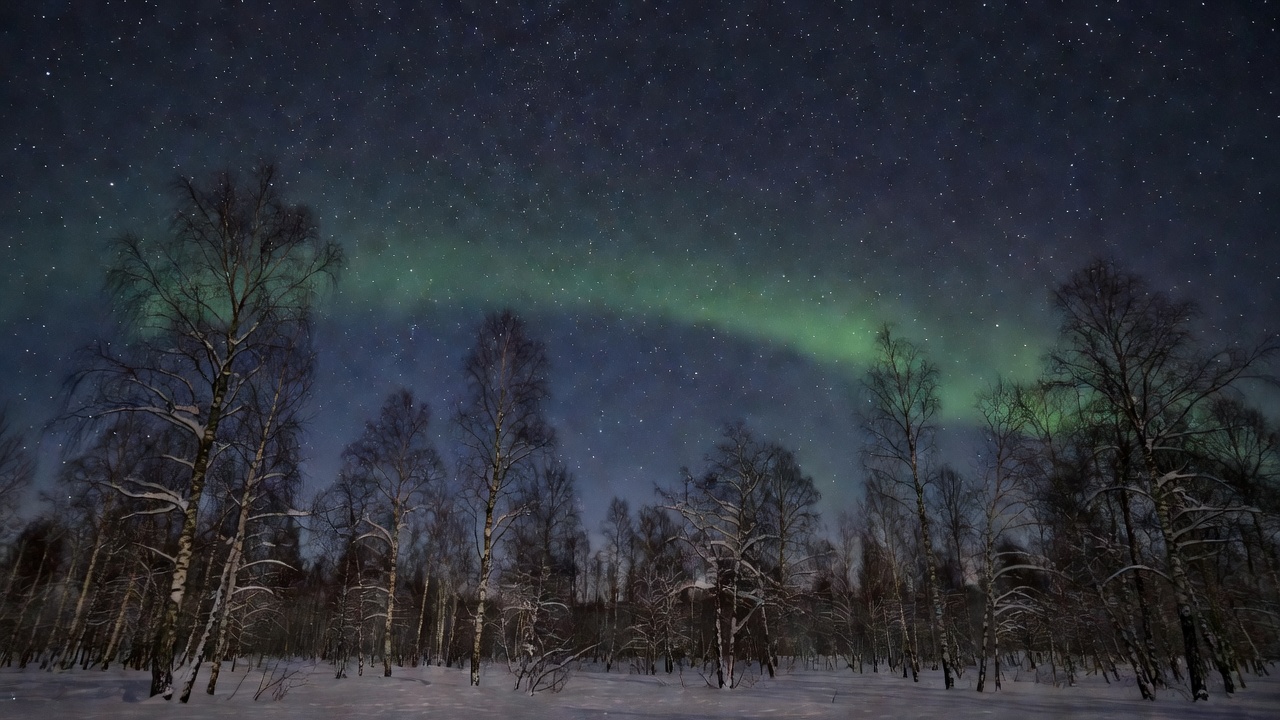
Aurora borealis occurs between 90 and 300 kilometres above the Earth's surface, where charged solar wind particles guided by our magnetosphere collide with oxygen and nitrogen atoms. All commercial weather clouds sit below 12 kilometres. That sixty-mile vertical separation means two completely independent systems must align for a sighting: an active magnetosphere overhead and a clear window through the lower troposphere.
Why Kp Is a Blunt Instrument at 69°N
Many smartphone apps encourage first-timers to fixate on the Planetary Kp Index—a zero-to-nine scale originally designed to measure three-hour averages of geomagnetic disturbance across mid-latitude magnetometers. If you are standing in Scotland or Southern Sweden, a high Kp (5 or above) is essential to push the auroral oval southward.
However, if you are already positioned directly beneath the quiet-time auroral oval in Tromsø, Abisko, Alta or Akureyri, a three-hour averaged Kp of 1 or 2 is frequently accompanied by crisp overhead arcs whenever a localized substorm releases stored tail energy. Dismissing a clear Arctic night because an app predicts "Kp 1.67" is the most common mistake first-time travellers make.
Instead of multi-day Kp forecasts, experienced observers look at real-time solar wind telemetry measured by spacecraft at the L1 Lagrange point (such as DSCOVR and ACE), which provides a forty-five to sixty-minute lead time before that solar wind parcel reaches Earth's magnetopause.
Three Real-Time Metrics Worth Checking
1. IMF Bz (Interplanetary Magnetic Field Orientation): Measured in nanoteslas (nT). When Bz tips negative (southward, e.g., -6 nT), it couples smoothly with Earth's northward magnetic field lines, opening the door for energy transfer.
2. Solar Wind Speed (km/s): Ambient solar wind drifts around 320–380 km/s. Coronal hole high-speed streams pushing past 500–650 km/s create dynamic, fast-rippling curtains.
3. Local Magnetometer Deflection: Regional stations operated by UiT (Tromsø Geophysical Observatory) or IRF (Kiruna) show real-time ground current dips in nanoteslas directly above your valley.
Reading High, Mid and Low Cloud Layers
Meteorological services such as Norway's Yr.no and the Icelandic Meteorological Office (Vedur.is) split cloud cover forecasts into three altitude bands. Understanding which layer is present changes how you spend your evening:
High Clouds (Cirrus / Cirrostratus, above 6,000m)
Composed of thin ice crystals. High cloud rarely blocks the aurora; instead, stars and green auroral light diffuse softly through the veil, often creating atmospheric halos around the moon and hills.
Mid Clouds (Altostratus / Altocumulus, 2,000m–6,000m)
Often broken into cellular bands moving steadily with upper-level winds. Staying patient in one dark spot for ninety minutes frequently allows wide starry corridors to pass directly overhead.
Low Clouds & Fog (Stratus / Cumulus, below 2,000m)
Dense water-droplet clouds that block sky light completely. Because low clouds are trapped by terrain, driving twenty minutes to the leeward side of a mountain range often leaves them behind.
Setting Honest Visual Expectations
Human retinas contain two types of photoreceptors: rods, which handle low-light monochrome vision, and cones, which require substantially higher photon thresholds to register colour. During quiet or moderate auroral activity, the faint band stretching across the northern horizon activates only your rod cells. To your eyes, it resembles a luminous chalky cloud or a wisp of woodsmoke illuminated by starlight.
You can distinguish a faint aurora from an ordinary cloud by one simple test: stars shine cleanly through a faint auroral band, whereas low water-vapour clouds obscure background stars. When solar wind coupling strengthens and particle precipitation intensifies, oxygen emissions at 557.7 nanometres cross the cone threshold—transforming that silver ribbon into unmistakable lime green, occasionally bordered by lower-altitude nitrogen crimson edges at 90–100 km during energetic substorms.
Even on nights when the sky remains quietly silver or veiled in drifting snow, standing outdoors beside a frozen sound while harbor seals surface in the dark water is a memory worth travelling north to find.